Find Us on Facebook

Tuesday, 29 May 2012

BORNEO-BOUND : Lush natural wonders. Rich culture. Warm locals. The allure of Borneo is endless.

SARAWAK: LAND OF THE HORNBILLS

Beautiful sunset at the
Kuching Waterfront
CITY CALL
The cleanest city in Malaysia, Kuching impresses with wonderful sights, sounds, sips and savouries from museums to forts, eateries to cultural centres. It’s a pleasant city to walk about and soak in all the sights. Pay special attention to the colonial buildings, some of which are the legacy of the Brooke family, for instance the Fort Margherita and The Astana which is currently the residence of the head of state. The city’s newest five-star brand, Pullman Kuching which stands proud atop a hill at Jalan Mathies, makes for a wonderful stay in the city. Last but not least, don’t forget to watch the spectacular sunset from the Kuching Waterfront.

MULU CAVES
With evidence that the cave was used for burial between 1,500 and 3,000 years ago, the razor-edged Mulu mountain embraces one of the largest limestone caves in the world.  The Gunung Mulu National Park, a Unesco World Heritage Site, is a great place to explore the caves, jungles, rivers and waterfalls. The Sarawak Chamber is the world’s largest cave at 700 metres long, 400 metres wide and 70 metres high, while the Clearwater Cave is over 100 kilometres long with one of the world’s largest underground river systems. Another must-see is the great bat exodus when millions of the winged creatures leave the caves en masse at dusk.

Sarawak Longhouse
MUSIC IN THE FOREST
The grounds of the Sarawak Cultural Village transforms into a festival site every July when the Rainforest World Music Festival happens.  Since 1997, the three-day music fest of performances and workshops brings together international and indigenous musicians as well as music lovers from every corner of the world. Tickets are often booked way in advance because this is a truly unique festival that has received rave reviews from the international media. Here at the cultural village, you too will be able to experience and see the lifestyle of local ethnic tribes such as the Iban, Penan, Bidayuh, Melanau and Orang Ulu.

The famous Laksa Sarawak
EATS & SIPS
Sarawak, being a multi-ethnic state, has plenty of good grub to offer. While the popularity of Laksa Sarawak cannot be denied, there are other foodstuffs from the land of the hornbills that will impress with their unique flavours.  Umai, the raw fish salad with chilli loved by most Sarawakians can usually be found at mixed rice eateries. Other much-loved dishes are the Nasi Aruk, Kolo Mee and Kek Lapis
Sarawak. The dizzying tuak, a type of homebrewed local wine made from rice or sago, also deserves a mention as a must-try alongside the Iban whisky or langkau.

Lamin Dana, the Melanau
traditional tall house in Mukah


LAMIN DANA
Experience authentic Melanau living at Lamin Dana in Mukah, a unique cultural homestay resort and living museum managed by Diana Rose who is very passionate about her Melanau roots. Dedicated to the preservation of Melanau culture, music, handicraft, dance and food, Lamin Dana offers a lovely experience of staying in an authentic Melanau tall house, meeting the locals, understanding the importance of sago to the Melanau and witnessing how this palm product is obtained.  And by the way, if you’ve ever wanted to go on a mangrove safari, this would be the spot.

As published in The Well | TRAVEL May 2012

Wednesday, 9 May 2012

Rantau Kemiding Homestay Program, Kanowit

Rh Benjamin Angki, Rantau Kemiding was built in 1936 and located 4km from Kanowit town. Accessible by road and river transport. There are 64 doors or families stay in this longhouse which 53 make up the longhouse proper. Population in this longhouse is 409 people which 216 are females. This longhouse is the 2nd Homestay Program operator approved by Ministry of Tourism Malaysia. There are 14 trained homestay operators from this longhouse.

The Homestay Program offers comfortable and clean accommodations,  daily “longhouse style” breakfast and email access for international visitors and their families. This longhouse is located at the riverbank of Kanowit river and it has all public facilities, which include internet facilities.

How to get there
Located 118km from Sibu town area. Visitors have few choices to go to Kanowit; either by bus (RM8 per person one way) / Taxi (RM50 per taxi one way) or by expressboat (RM8 per person  for one way). From Kanowit town to Rh Benjamin Angki you can hop on the local van.

Activities
Indoor activities at this longhouse are very much similar with other longhouses where tourist will be invited to join their “family” routine activities such as go to the farm, repair the fishing net, etc. Other than that you will also have the opportunity to try making your own rice wine, cook the traditional food in bamboo (manok pansuh), fried your own “kuih jala” or “penyaram”. They will also offer you the traditional Iban dance, Ngajat session. Don’t be surprise that your instructors would be the primary school students….
Fishing is one of the activities at the homestay program. If you enjoy fishing, then you can ask for the fishing rod from your “family”.  They will teach you how to use the tradition fishing rod.  Else you join the jungle trekking. Wear a proper attire like cap, long sleeve shirt, shoes and bring your own drinking water. The trekking will take you at least 45 minute to 1 hour.
 
Staying at the Trang Lodge
Visitors can choose to stay at the one and only chalet they have, located just in front of the longhouse, with 2 rooms and air-cond facility.

 
Attractions
Fort Emma
Located in Kanowit town and only 5 minute drive from the longhouse. Fort Emma was built by the White Rajah and is one of the historical place in Kanowit. For more information on Kanowit, visit Historical Gallery which located on the ground floor of the building. For those who want to check their email they can do so at the 1st floor.

St Francis Xavier Church
The oldest Church in Kanowit. Located along the way from the longhouse to Kanowit town.

Tut-Tut Boat tour
Famous water transport from Kanowit town to SMK Sedaya for the local. It cost you less than RM2 per person for the short trip.

Kampung Sg Bedil
Located 10 minute away by boat from Kanowit town. Bedil means Canon. This Canon is given by the white Rajah to remark the peacemaking among the local community during Rajah era. You still can see the canon in this village.

Daily Package
  • Welcoming drinks
  • Cultural dance
  • Foods and drinks
  • Longhouse tour & story sharing session
  • Entrance fees.
Package 2 DAYS 1 NIGHT
Day 1
  • Welcoming drinks
  • Cultural dance
  • Accommodation
  • Foods and drinks
  • Longhouse tour & story sharing session
  • Trekking
  • Entrance fees
Day 2
  • Blowpipe demonstration
  • Handicraft making
  • Indoor traditional games
Optional Activities
(Can be arranged upon request)
  • Fishing safari
  • Rubber tapping & processing the rubber
  • River cruise by local boat
  • Ranyai and betaboh session
  • Try yourself Iban traditional costume
For more information please contact:
Tuai Rumah Benjamin Angki
C/O Rh Benjamin Angki, Rantau Kemiding, 96700 Kanowit
Tel/Fax : 084 -753576 / 013-8823076
E-mail: ben_8845@yahoo..com
Blog: http://rantaukemiding.blogspot.com

Tuesday, 17 April 2012

A Chinese temple in a Malay community


Imagine the throng of Buddhist devotees descending upon this little Malay fishing village to make their passage of way to this temple on top on a hill during the auspicious days of the temple’s calendar. The temple and the village, Kampung (village) Muara Tebas best exemplifies the racial harmony and religious tolerance in Malaysia. And this co-existence dates back to two hundred years ago.

Ching San Yen is a Buddhist temple located about 30 KM from Kuching City. ‘Ching San’ means ‘Green Mountain’ in Chinese. It is situated on a 2.5 acre site on a hill, 120 ft above sea level. One has to climb 142 steps to reach the top. "The Sarawak Book Of Amazing Facts & Records" published by the Ministry Of Tourism of Sarawak in 2011 described Ching San Yen Temple as the most decorative Buddhist temple in Sarawak.

There are two versions on the origin of Ching San Yen. The first version is when, about 200 years ago, the Chinese immigrants who had safely arrived at the estuary of Sarawak River went on to build the temple to thank Budhha, Bodhisattvas & Machu (Goddes Of Sea) for their blessing of a safe voyage from China. The immigrants would come to the temple to worship from time to time to receive blessing for good health and good business.

The other version tells of, when Chinese came to Sarawak to trade about two hundred years ago, they started a trading station along the sea-side at the foot of a hill. The site was chosen for its good geomancy to place the statue of Budhha, other Bodhisattvas & Machu (Goddess of the Sea) in return for good business and blessings. When they needed fresh water, Buddha indicated to them a well at the foot of the hill. This eventually led to the building of a temple on the hill facing the sea.

The well is still in existence and had been the source of fresh water until 1980 when water supply was extended to the village.

Ching San Yen underwent a major renovation and extension work in 1994 and was completed two years later.

The view of the temple from the jetty
Buddha’s Feet

Part of the 142 steps to reach the temple proper

The seafood restaurants get the freshest catch for your menu. And they are popular with Kuching residents.

Muara Tebas Malay Village located at the foothill of the temple site.

 
How To get There:
By Bus: No6A (Petra Jaya Transport Company)
Time: 08.30am, 10.00am, 12.40pm, 2.45pm & 5.15pm
Van Sewa: RM20.00 - RM 25.00 per car/one way 
Duration: Half-day
No admission fee

Friday, 13 April 2012

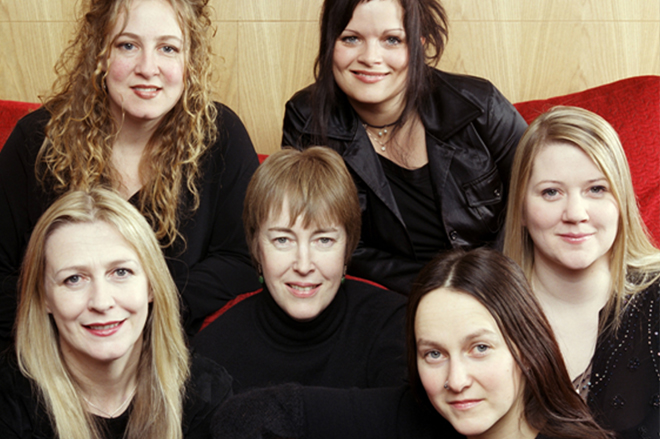
Let’s hear about this exciting group – THE STRING SISTERS

string sisters
Live at Rainforest World Music Festival 2012

THE STRING SISTERS is a band that I’ve been lusting over for a long time. Six of the world’s leading female Celtic violinists backed by an all male rhythm section.

With their own frantically busy solo careers, they cannot get together very often. To actually find that they can make it for the Rainforest weekend was like winning the lottery.

And just see where these beautiful ladies come from –
- Catriona MacDonald from the Shetland Islands in Scotland and co-founder of the award winning Blazin’ Fiddles and also leader of Vamm
- Elizabeth Knowles from the USA who tours with mega productions like Riverdance and Celtic Legends
- Emma Hardelin who is lead singer of Swedish rock-folk band Garmarna and Triakel
- Annbjorg Lien who is Norway’s most innovative hardanger fiddle player and who plays everything from world to jazz to the avant-garde
- Mairead Ni Mhaonaigh from the much loved Irish band Altan and who also sings
- Liz Carroll who was the first Irish-American musician nominated for a Grammy and won the Gradam Ceoil “Traditional Composer of the Year” in 2011.

And they play with four of the most sought after rhythm section on both sides of the Atlantic – James Mackintosh on drums, David Mulligan on piano, Conrad Ivitsky on bass and Tore Bruvoll, another Grammy nominee on guitar.

I have been trying every year to get them to Malaysia since I saw them at the fabulous Forde Festival in Norway. All that fiery fiddling. And some of the most lovely haunting Irish and Swedish vocals.

And now we’ve succeeded in squeezing one day out of them.

One day. That’s it.

They play on Friday night the 13th of July, the first day of the festival, and early the next morning, the two American girls get right back on the plane to return just in time for their next gig in Chicago.

So if you miss them, they’re gone!

For more info, visit http://rwmf.net

Jun Lin
Artistic  Director - Rainforest World Music Festival 2012

Wednesday, 28 March 2012

What is...BUAH ENGKALAK??


Buah’ means fruit in Bahasa Malaysia. So buah engkalak simply means ‘engkalak’ fruit. All of our three trees are fruiting again and this week we harvested a big basketful.  Engkalak or Litsea garciae belong to the same family as avocado.

I didn’t like this fruit before; it truly is an acquired taste much like avocado too. But now, I love it! Rich and creamy and especially tasty with a pinch of salt or soya sauce, I think it’s a lot nicer than avocado!

As the fruits mature, they will turn a bright pink. However, they are only ready to be eaten when they turn a deeper red and the flesh has become soft. When consumed either green or pink, the flesh will be tough and tastes bitter-spicy. They are sold from RM2 to RM4 per basket.

When planted from seed, it takes about 4 or 5 years for a tree to reach fruiting size. The tree can attain a large size with large leaves and branches that spread out several meters from the trunk. It grows to about 15-20 or more meters high so this isn’t your normal garden tree as it requires a lot of space. Expect the first successful harvest around the fifth year. Well worth the wait, especially if you love avocado-type fruits. This is a tropical tree so unfortunately, not everyone will be able to plant this and enjoy the fruits!

To prepare the ripe fruits, simply place them in a deep bowl and pour hot water at about 80 degrees Celsius. Leave for about 5 minutes and the fruits would have “fattened” up and the flesh turned soft. Then simply squeeze out the large, round and hard seed inside and eat the soft creamy white flesh (minus the skin of course!). Very tasty with a pinch of salt!! Yummy....Engkalak is also known as butter-fruit locally. 


Sarawak Malaysia Borneo...
Where Adventure Lives..


Author: Deckson Bundak

UA-22339029-1